A Kennydale homeowner in Renton called us about moisture ants appearing every spring for three years. They sprayed them with Raid each season. Ants disappeared for a few weeks, then returned. After three years of this cycle, they finally called us.
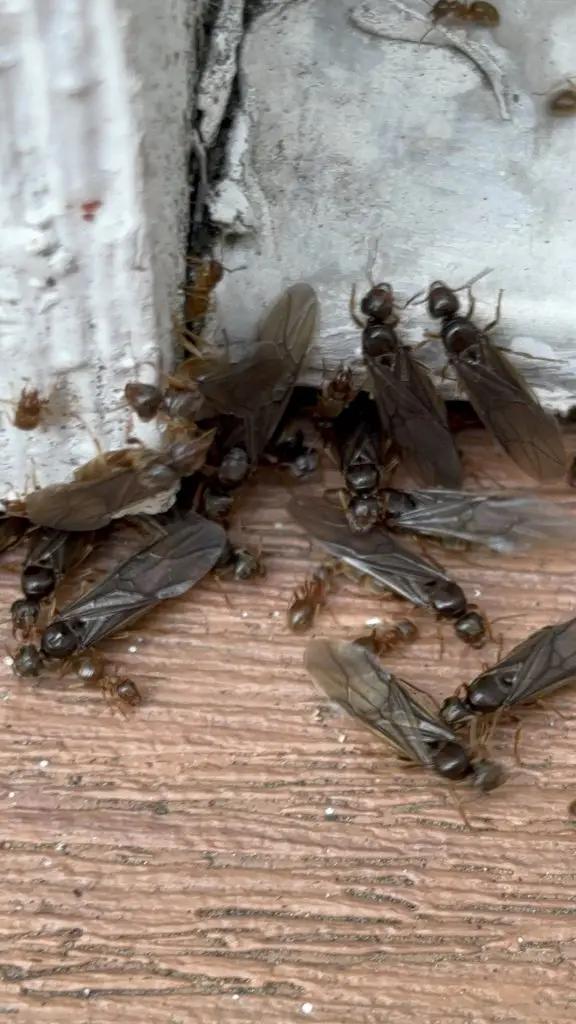
Our technician found the moisture ants within ten minutes. They were nesting in bathroom wall studs behind the shower. We used a moisture meter and found twenty three percent wood moisture content. Healthy wood is eight to twelve percent.
We traced the moisture source to a slow shower pan leak that had been dripping for four years. The leak had rotted six wall studs and two floor joists. The moisture ants were not the problem. They were the FREE ALARM SYSTEM warning of $8,000 in hidden structural damage.
- Moisture ant treatment cost: $450
- Plumbing repair cost: $1,200
- Structural carpentry cost: $6,800
- Total: $8,450
If they had called us in year one when moisture ants first appeared, the damage would have been minimal. Fixing a shower pan leak costs $1,000 to $1,500. Catching it early saves $6,000 to $8,000 in structural repairs.
That is why we include FREE moisture inspection with every moisture ant treatment. The ants are telling you something. We find what they are trying to say.
Call (206) 571-7580 for moisture ant treatment plus FREE moisture meter inspection. Same day service available. We find the water damage before it costs you thousands.
What Are Moisture Ants and Why Do They Only Appear in Seattle Homes With Water Damage?
Moisture ants are a general term for several ant species that ONLY nest in wood with 15% or higher moisture content. Healthy wood in Seattle homes ranges from 8% to 12% moisture. If you have moisture ants, you have ACTIVE water damage somewhere.
Common Moisture Ant Species in King County
- Lasius species. Small yellow to light brown ants, ⅛ inch long. Most common moisture ant in the Seattle area. Nest exclusively in wet, rotting wood.
- Acanthomyops species. Yellow to golden brown ants, slightly larger than Lasius. Less common but indicate the same moisture problem.
Both species share identical behavior. They do not nest in healthy, dry wood. They require 15%+ moisture to survive. This makes them perfect indicator species for hidden water damage.
Why Moisture Ants Choose Damaged Wood
Wood with 15% moisture is softened by rot, making it easier for ants to excavate galleries for nesting. It provides the humid environment moisture ants need and usually indicates an ongoing water source nearby.
Where Moisture Ants Nest in Seattle Homes
- Bathroom wall studs. Shower pan leaks, tub overflow leaks, toilet base leaks all create perfect conditions.
- Kitchen cabinets and walls. Sink plumbing leaks under cabinets, dishwasher connection leaks, refrigerator water line leaks.
- Crawl space support posts. Ground moisture, poor vapor barrier, inadequate ventilation creates damp wood.
- Basement rim joists. Foundation moisture, poor drainage, gutter overflow saturates wood.
- Window frames and sills. Leaking windows, failed caulking, condensation rot creates nesting sites.
- Attic rafters and sheathing. Roof leaks, ice dam damage, inadequate ventilation causes moisture buildup.
- Garage door headers. Rain exposure without proper flashing. Common in older Seattle homes.
- Deck posts and beams. Constant outdoor moisture exposure, especially where posts contact ground.
For a complete guide to all ant species in the region, visit our Ant Control Services in King County, WA page.
Why Seattle Has More Moisture Ant Problems Than Almost Any Other City
Seattle averages 37 inches of rain annually, with 150 days of measurable precipitation. This creates chronic moisture issues in homes built before modern moisture management standards.
Approximately 40% of Seattle area homes were built between 1950 and 1980. These older homes have:
- Wood siding instead of modern composite materials. Wood siding absorbs moisture and transfers it to framing.
- No house wrap or moisture barriers. Modern homes use Tyvek or similar. Older homes have nothing between siding and framing.
- Inadequate crawl space ventilation. Many older homes have too few vents or vents that are blocked.
- No vapor barriers in crawl spaces. Modern code requires 6-mil plastic minimum. Older homes have bare dirt.
- Original plumbing showing age. 50+ year old pipes develop slow leaks that go undetected for years.
- Poor exterior drainage. Gutters inadequate or absent. Grading slopes toward house instead of away.
- Single pane windows that condense. Condensation runs down frames and rots wood over time.
These factors combine to create chronic moisture issues. Add Seattle rainfall and you have perfect conditions for moisture ants.
King County Moisture Ant Hotspots (20 Years of Treatment Experience)
- Renton Highlands: Homes built 1960s to 1970s. Bark mulch landscape beds common. Irrigation systems overwatering. Moisture ants extremely common in bathroom walls.
- Seattle Capitol Hill: Victorian and Craftsman homes from early 1900s. Original plumbing failing. Single-pane windows condensing. Moisture ants in window frames and bathrooms.
- Bellevue Somerset and Eastgate: Homes from 1970s to 1980s. Split level construction with complex rooflines. Ice dam damage creates attic moisture. Moisture ants in attic rafters.
- West Seattle: Mix of older homes near water. Higher humidity from Puget Sound. Inadequate crawl space ventilation. Moisture ants in crawl space posts.
- Kirkland Juanita and Finn Hill: Lakefront proximity increases humidity. Many homes with basements. Poor exterior drainage. Moisture ants in basement rim joists.
- Federal Way Twin Lakes: Established neighborhoods, 1970s construction. Bark mulch beds against foundations. Moisture ants in bathroom and kitchen walls.
- Issaquah and Sammamish: Newer construction but heavy irrigation for landscaping. Overwatering creates moisture issues. Moisture ants near irrigation zones.
How to Identify Moisture Ants vs. Other Seattle Ant Species
Moisture ant identification is critical. Treatment approach differs completely from carpenter ants or odorous house ants. Misidentification leads to wasted money on wrong treatment.
Visual Identification
| Feature | Moisture Ants | Carpenter Ants | Odorous House Ants |
|---|---|---|---|
| Size | ⅛ inch | ¼ to ½ inch | ⅛ inch |
| Color | Yellow to golden brown | Black (or red/black) | Dark brown to black |
| Body Shape | Uniform size workers | Varying sizes (majors/minors) | Uniform size |
| Movement | Slow, near moisture | Faster, foraging | Fast, frantic trails |
Behavioral Clues
Location tells everything. Moisture ants appear near water damage.
- If you see small yellow ants in bathroom, check for shower leaks, tub overflow issues, toilet base leaks.
- If you see small yellow ants in kitchen, check under sink for plumbing leaks, dishwasher connections, refrigerator water line.
- If you see small yellow ants in crawl space, check for ground moisture, vapor barrier condition, post rot.
Seasonal pattern. Moisture ants swarm in spring and fall. Indoor swarmers mean the colony is inside your walls. This is different from carpenter ants which swarm only in spring.
No interest in food. Unlike odorous house ants attracted to sugar, moisture ants ignore food baits. They are in your home for MOISTURE, not food.
Damage Pattern
Moisture ants accelerate wood rot. They excavate galleries in already wet wood, spreading decay fungi throughout. Wood deteriorates faster with moisture ant activity than without.
Frass appearance. Moisture ant frass is darker, more decomposed-looking, containing more rotted wood particles. Carpenter ant frass is lighter, sawdust-like, cleaner-looking.
Location of damage. Moisture ants damage wood that was already compromised. Finding moisture ants means water damage came FIRST. Ants came SECOND.
Common Misidentification Mistakes Seattle Homeowners Make
- Mistake One: Thinking moisture ants are baby carpenter ants. Carpenter ant workers are ⅜ to ½ inch. Moisture ants are ⅛ inch. They are completely different species, not different ages.
- Mistake Two: Calling them yellow jackets. Yellow jackets are wasps, not ants. Moisture ants are yellow-colored ants completely different insects.
- Mistake Three: Confusing with termites. Termite swarmers have straight, thick waists and straight antennae. Moisture ant swarmers have pinched waists and elbowed antennae.
- Mistake Four: Assuming they are sugar ants. Sugar ants (odorous house ants) are black and attracted to food. Moisture ants are yellow brown and attracted to moisture.
Why DIY Moisture Ant Treatment Fails 85% of the Time
Homeowners waste hundreds of dollars and months of time trying DIY moisture ant solutions before calling professionals. Here is why DIY fails:
Problem One: You Cannot Find the Water Source
Moisture ants nest in wet wood, but finding which wood is wet requires a professional moisture meter. Moisture meters cost $150 to $400. Most homeowners do not own one.
Without a moisture meter, you are guessing. You might spray ants in the bathroom, but the water source is actually in the wall cavity from a tub overflow two years ago. You never find it.
A professional moisture inspection takes 30 to 60 minutes. We check every suspicious area bathrooms, kitchens, crawl spaces, attics, basements. We find moisture you cannot see.
Problem Two: Hardware Store Sprays Are Repellent Formulas
Raid Ant Spray, Ortho Home Defense, Terro Ant Spray all repellent formulas. Ants smell the chemical and avoid treated areas.
What happens when you spray repellent on a moisture ant trail? You kill 20–50 ants you can see. The other 950 ants in the colony avoid the sprayed area. The colony relocates to a different part of the wall void. Now you have ants in the bedroom instead of the bathroom. Problem worse, not better.
Repellent sprays DO NOT eliminate colonies. They scatter colonies. This is called colony budding.
Problem Three: Moisture Ant Baits Do Not Work
Terro liquid ant bait works great for sugar ants attracted to sweets. Moisture ants ignore it completely. Moisture ants are not foraging for food. They are nesting in wet wood.
Protein baits do not work either. Moisture ant workers feed on fungus growing in rotted wood. They do not need external food sources like other ant species.
Without food motivation, baits are useless for moisture ants.
Problem Four: You Cannot Access the Colony
Moisture ants nest INSIDE wall voids, floor cavities, and crawl space posts. You cannot spray inside walls with hardware store products.
Even if you drill holes and spray inside walls with Raid, you are using the wrong product (repellent formula) in the wrong delivery method (pressure spray).
Professional treatment uses dust formulations that spread through wall voids. Non-repellent so ants walk through it and transfer it to nest mates. It reaches the entire colony, even deep in wall cavities.
Problem Five: You Are Treating Symptoms, Not Cause
Killing moisture ants without fixing the water leak is pointless. New ants will move into the same wet wood within weeks.
The ONLY way to eliminate moisture ants permanently:
- Find water source with moisture meter
- Fix leak with proper plumber or contractor
- Treat existing ant colony with professional products
- Remove rotted wood if severely damaged
- Monitor to ensure ants do not return
DIY approach skips steps 1, 2, 4, and 5. That is why it fails.
Our Moisture Ant Treatment Process That Actually Eliminates Colonies and Finds Water Damage
Step One: Complete Moisture Inspection with Professional Moisture Meter
We inspect every area where moisture ants could nest:
- All bathrooms. Shower surrounds, tub areas, toilet bases, under sinks, exhaust fan terminations.
- All kitchens. Under sinks, behind dishwashers, refrigerator water lines, garbage disposal connections.
- Crawl spaces. Support posts, rim joists, subfloor, vapor barrier condition, ventilation adequacy.
- Attics. Roof sheathing, rafters, bathroom exhaust terminations, ventilation adequacy.
- Basements. Rim joists, foundation walls, floor joists, sump pump areas.
- Exterior. Window frames, door frames, siding condition, gutter function, drainage grading.
We use a professional moisture meter that measures wood moisture content from 8% to 30%. Readings above 15% indicate problem areas. Readings above 20% indicate severe moisture requiring immediate repair.
Step Two: Identify Exact Water Source
Finding ants is easy. Finding what caused the moisture that attracted ants is detective work.
Common water sources we find:
- Shower pan leaks. Pan membrane failed, allowing water under the shower floor. Slow leak over years rotting wall studs. Very common in showers 10+ years old.
- Tub overflow gasket failure. Every bathtub has an overflow drain with a rubber gasket. Gasket fails after 15 to 20 years. Water leaks into the wall during baths. Homeowner never knows until moisture ants appear.
- Toilet wax ring failure. Wax ring seals toilet to floor drain. Fails after 20+ years. Slow leak rots subfloor and floor joists. Moisture ants appear in bathroom floor areas.
- Under sink plumbing. Supply line connections, drain traps, garbage disposal. Slow drips accumulate in the cabinet bottom, rotting the cabinet floor and wall behind.
- Dishwasher connections. Water supply, drain connection. Leaks hidden behind the dishwasher go undetected for years.
- Refrigerator water line. Ice maker and water dispenser lines. Connections fail, lines crack. Slow leak rots floor under refrigerator.
- Roof leaks. Missing shingles, failed flashing, ice dam damage. Water enters attic, runs down rafters, creates moisture at points far from the actual leak.
- Gutter overflow. Gutters clogged or undersized. Water overflows behind gutters, saturating fascia and wall sheathing.
- Foundation drainage. Grading slopes toward house. Downspouts discharge too close to foundation. Water saturates rim joists and crawl space posts.
We do not guess. We find the exact source. We document with photos. We provide a written report.
Step Three: Professional Treatment with Non-Repellent Dust
Once we identify the moisture source and ant colony location, we treat with professional formulations unavailable to homeowners.
- Wall void treatment. We drill small access holes at the top of the wall. We inject a non-repellent dust formulation into the wall cavity. Dust spreads throughout the wall void, coating all surfaces. Moisture ants walking on dusted surfaces pick up product on their legs and bodies. They transfer product to nest mates during normal grooming. Product spreads throughout the colony. Colony eliminated in 7 to 14 days.
- Crawl space treatment. We treat support posts where moisture ants nest. We treat rim joists. We treat any wet wood harboring colonies.
- Attic treatment. If moisture ants are in the attic, we treat rafters and sheathing where colonies nest.
- Exterior treatment. We treat window frames, door frames, and any exterior wood showing moisture ant activity.
Step Four: Provide Detailed Moisture Source Report with Repair Recommendations
We provide a written report documenting:
- All areas where moisture was detected with moisture meter readings
- Exact locations of ant colonies
- Photos of damage and moisture issues
- Specific repair recommendations for each issue
- Contractor referrals if needed
Your moisture report becomes invaluable documentation for:
- Plumber to fix the exact leak we identified
- Carpenter to repair the exact structural damage we found
- Insurance claim if damage is extensive enough for coverage
- Future home sale disclosure showing the problem was properly addressed
Step Five: Follow Up to Verify Repairs Made and Ants Eliminated
- 30 day warranty. If moisture ants return within 30 days of treatment, we retreat at no charge. However, the warranty requires you cooperate with moisture repair recommendations. If you do not fix the leak, ants will return because wet wood is still present.
- 90 day follow up inspection recommended. After repairs are made, we reinspect with a moisture meter to verify wood moisture content has returned to the normal 8–12% range. We verify no new ant activity. We confirm the problem is fully resolved.
Moisture Ant Treatment Pricing: Seattle Transparent Costs, No Surprises
Standard Moisture Ant Treatment with FREE Moisture Inspection
Cost: $400 to $650 depending on home size and severity
Includes:
- Complete moisture meter inspection of entire property
- Treatment of all active moisture ant colonies
- Wall void dust treatment if needed
- Written moisture report with repair recommendations
- Photo documentation of moisture issues
- Contractor referrals for repairs
- 30 day warranty
Best for: Single moisture ant colony, moderate moisture issue, moisture source accessible for repair.
Severe Moisture Ant Infestation (Multiple Colonies)
Cost: $250 to $1,200
Includes: Everything in standard treatment PLUS:
- Treatment of multiple separate colonies
- Extensive wall void treatment (multiple rooms)
- Crawl space AND attic treatment if both affected
- More detailed moisture assessment
- Coordination with contractors for complex repairs
- 90 day follow up inspection included
Best for: Multiple moisture ant colonies in different areas, extensive moisture damage, complex repair needs, older homes with multiple moisture issues.
What We Do NOT Charge For
- Moisture meter inspection. This is FREE with moisture ant treatment. (We charge $150 for standalone moisture inspection if no treatment is needed, but this is rare. Almost always, if moisture ants are present, treatment is needed.)
- Follow up visit if ants return within warranty period. This is FREE. We guarantee our work.
- Phone consultation. Call us and describe your moisture ant situation. We provide a free phone estimate before scheduling service.
What Repairs Cost (That We Do NOT Do)
We treat moisture ants. We find the water source. We refer repair work to licensed contractors.
| Repair Type | Estimated Cost |
|---|---|
| Shower pan replacement | $1,000–$2,500 |
| Tub overflow gasket replacement | $200–$400 |
| Toilet wax ring replacement | $150–$300 |
| Under sink plumbing repair | $100–$500 |
| Structural wood replacement | $500–$15,000 (varies widely) |
| Roof repair | $300–$3,000 |
| Gutter repair or replacement | $500–$2,000 |
| Foundation drainage correction | $1,000–$5,000 |
Real Seattle Homeowner Case Studies: How Moisture Ants Saved Them from Catastrophic Damage
Case Study One: Kennydale, Renton $8,000 Bathroom Damage
Homeowner situation: Moisture ants appearing in master bathroom every spring for three years. Sprayed with Raid each time. Ants disappeared for a few weeks, then returned.
Our inspection: Found moisture ants nesting in wall studs behind the shower. Moisture meter showed 23% wood moisture in studs (normal is 8 to 12%).
Water source identified: Shower pan membrane had failed four years prior. Every shower sent water under the shower floor into the wall cavity. Slow leak over four years rotted six wall studs and two floor joists.
Moisture ant treatment cost: $450
Repair costs:
- Shower pan replacement: $1,800
- Wall stud replacement: $3,200
- Floor joist sistering: $2,800
- Tile replacement: $1,600
- Total: $8,400
Cost if caught year one: Shower pan replacement $1,500 to $2,000. Minimal structural damage, maybe $500 additional framing repair. Total: $2,000 to $2,500
Money lost by waiting three years: $6,000 in preventable structural damage
The moisture ants were a FREE alarm system. The homeowner ignored the alarm for three years. Damage accumulated. The final bill was four times higher than if addressed immediately.
Case Study Two: Capitol Hill, Seattle $12,000 Window Frame Rot
Homeowner situation: Small yellow ants appearing around a bedroom window every fall for two years. Thought they were coming from outside. Sprayed the window area with Ortho Home Defense.
Our inspection: Found moisture ants nesting in the window frame and wall studs around the window. Moisture meter showed 18 to 25% moisture in wood. Paint on interior window trim was bubbling from moisture.
Water source identified: Window was original single-pane from 1925. Condensation had been running down the glass into the frame for decades. Failed exterior caulking allowed rain into the wall. Combined interior condensation and exterior water entry rotted the window frame, sill, and surrounding wall studs.
Moisture ant treatment cost: $400
Repair costs:
- Window replacement (historically appropriate wood window): $3,500
- Wall stud replacement around window: $2,800
- Interior trim replacement: $1,200
- Exterior siding repair: $1,500
- Painting: $3,000
- Total: $12,000
Cost if caught when moisture ants first appeared: Window replacement $3,500, minor framing repair $500. Total: $4,000
Money lost by waiting two years: $8,000 in preventable structural damage
The moisture ants appeared as soon as rot became severe enough for nesting. The homeowner sprayed them instead of investigating why yellow ants were at the window. Two years later, damage quadrupled.
Case Study Three: West Seattle $15,000 Crawl Space Foundation Damage
Homeowner situation: Seeing small yellow ants occasionally in the downstairs bathroom. Ants would disappear when weather was dry. Returned when weather was wet. Pattern continued for two years.
Our inspection: Found massive moisture ant infestation in the crawl space. Multiple colonies in support posts and rim joists. Moisture meter showed 20 to 30% moisture in wood. Posts were soft and spongy.
Water source identified: No vapor barrier in crawl space. Bare dirt floor. Inadequate ventilation only 4 vents for a 1,200 sq ft crawl space. Ground moisture had been saturating wood for years. Three support posts had significant rot. Rim joists were severely damaged.
Moisture ant treatment cost: $750 (extensive crawl space treatment)
Repair costs:
- Vapor barrier installation: $2,000
- Support post replacement (9 posts at $800 each): $7,200
- Rim joist sistering: $3,000
- Additional ventilation installation: $1,200
- Structural engineer inspection: $800
- Total: $14,200
Cost if caught when ants first appeared: Vapor barrier installation $2,000, minor post repair $1,000. Total: $3,000
Money lost by waiting two years: $11,000 in preventable structural damage
The moisture ants were trying to tell the homeowner about the crawl space moisture problem. Seeing them occasionally meant colonies were already established. The pattern of appearing during wet weather meant a ground moisture issue. Addressing it immediately would have prevented $11,000 in foundation work.
Case Study Four: Bellevue Somerset $3,000 Kitchen Leak
Homeowner situation: Moisture ants appearing under the kitchen sink. Thought ants were attracted to the garbage disposal. Cleaned the area thoroughly. Ants kept returning.
Our inspection: Found moisture ants nesting in the cabinet bottom and wall behind the sink. Moisture meter showed 17% moisture in the cabinet floor and 19% in the wall.
Water source identified: Supply line connection to the faucet had a pinhole leak. Dripped approximately 1 ounce per hour. Leak had run for an estimated 18 months based on damage extent. Cabinet floor rotted. Wall studs behind the sink softened.
Moisture ant treatment cost: $350
Repair costs:
- Plumbing repair: $150
- Cabinet floor replacement: $400
- Wall stud repair: $600
- New cabinet bottom material: $200
- Total: $1,350
Cost if caught when ants first appeared: Plumbing repair $150, cabinet cleaning $50. Total: $200
Money saved by calling us when ants appeared: $1,150 in prevented damage
This homeowner called us within two months of first seeing moisture ants. The leak was caught before severe damage occurred. The cabinet and wall needed repair, but damage was contained. Quick action saved over $1,000.
How to Prevent Moisture Ant Infestations in Seattle Homes
Fix All Moisture Issues Immediately
Seattle moisture ant prevention is simple: eliminate moisture, eliminate ants.
Bathroom moisture control:
- Repair any shower pan leaks immediately. If water pools on the shower floor after a shower or if grout is cracking around the drain, the shower pan may be failing. Get it inspected.
- Replace tub overflow gaskets every 20 years. This is preventive maintenance most homeowners never do. Costs $200 to $400. Prevents thousands in water damage.
- Replace toilet wax rings when the toilet is removed for any reason. Never reuse an old wax ring. Costs $5 for a new ring. Prevents floor rot.
- Run the bathroom exhaust fan during and for 15 minutes after a shower. Reduces moisture in bathroom air. Prevents condensation on cold surfaces.
- Fix any leaking faucets or supply lines immediately. Even slow drips accumulate moisture over time.
Kitchen moisture control:
- Check under the sink monthly for any moisture. Wipe down pipes to feel for dampness. Catch leaks early.
- Replace supply lines to the faucet every 10 years. Braided stainless steel lines fail over time. Preventive replacement costs $20. Prevents water damage.
- Check dishwasher connections annually. Tighten if loose. Replace hoses every 5 years.
- Clean the refrigerator drip pan quarterly. Prevents overflow moisture.
- Check the refrigerator water line annually if you have an ice maker or water dispenser.
Crawl space moisture control:
- Install 6 mil plastic vapor barrier over bare dirt. Tape seams. Costs $1 to $3 per square foot installed.
- Ensure adequate ventilation. One square foot of vent area per 150 square feet of crawl space. Add vents if needed.
- Fix any plumbing leaks in the crawl space immediately. Even small leaks create moisture problems.
- Consider a crawl space dehumidifier if humidity is consistently above 60%.
Attic moisture control:
- Fix roof leaks immediately. Even small leaks cause major damage over time.
- Ensure bathroom exhaust fans vent OUTSIDE, not into the attic. This is a common mistake in older homes.
- Ensure adequate attic ventilation. Ridge vent plus soffit vents is ideal.
Exterior moisture control:
- Clean gutters twice yearly (April and November in Seattle).
- Ensure downspouts discharge 5 feet minimum from the foundation.
- Grade soil away from the foundation. Minimum 1 inch drop per foot for 6 feet.
- Caulk around windows annually. Prevents water entry into walls.
Address Wood Rot Immediately When Found
If you find soft, spongy wood anywhere in your home, get it inspected by a professional immediately.
Wood rot indicates a moisture problem. Moisture attracts moisture ants. Catching rot early prevents ant infestation and prevents structural damage from escalating.
Common locations to check for rot in Seattle homes:
- Window sills and frames (especially on the north side of the house)
- Bathroom subfloors around toilets and tubs
- Shower surrounds (especially around the shower pan)
- Deck posts (especially where the post contacts ground)
- Crawl space support posts
- Garage door headers
- Exterior door thresholds
Get Annual Moisture Inspection if Home Was Built Before 1990
Homes built before modern moisture management codes are at high risk for moisture ant problems in Seattle’s climate.
Annual moisture inspection costs $150 to $300. Includes moisture meter inspection of all critical areas. Identifies problems before they become severe. Provides repair recommendations. Prevents thousands in damage.
Think of it like annual car maintenance. You change oil to prevent engine damage. You inspect moisture to prevent structural damage.
Annual inspection is especially important if:
- Your home is over 30 years old
- You have had moisture ants before
- You have a crawl space (not a basement)
- You have had any plumbing leaks
- Your roof is over 15 years old
- Your gutters overflow during rain
- You have basement moisture or a musty smell
- Your bathroom exhaust fans are original
Frequently Asked Questions About Moisture Ants in Seattle
Q: How do I know if I have moisture ants or carpenter ants?
A: Moisture ants are small (⅛ inch), yellow to brown in color, and appear near moisture sources like bathrooms. Carpenter ants are large (¼ to ½ inch), black in color, and seen throughout the house. If ants are small and yellow near a bathroom or kitchen, you likely have moisture ants indicating water damage. Call us for free identification at (206) 571-7580.
Q: Can I treat moisture ants myself, or do I need a professional?
A: Moisture ant treatment is 90% finding the water source and 10% treating the ants. Without a professional moisture meter, you cannot find hidden leaks causing the problem. Hardware store sprays are repellent formulas that scatter colonies, making the problem worse. Professional treatment costs $400 to $650 and includes a FREE moisture inspection (a $150 value). Finding water damage early saves thousands in repair costs. Professional treatment is an investment, not an expense.
Q: How long does moisture ant treatment take to work?
A: Treatment application takes 1 to 2 hours, including moisture inspection. Ant activity stops within 72 hours. Complete colony elimination takes 7 to 14 days. However, if the water source is not repaired, new moisture ants will move into the wet wood within weeks. Permanent solution requires fixing the moisture problem the ants are warning you about.
Q: Do moisture ants cause structural damage like carpenter ants?
A: Moisture ants accelerate rot in already water-damaged wood. They do not damage sound wood. However, the presence of moisture ants means you have active water damage, which DOES cause structural damage if not addressed. Moisture ants are a symptom of a bigger problem. The water leak is what damages the structure. The ants just warn you about it.
Q: Why do moisture ants come back every spring even after treatment?
A: Moisture ants return every spring because the water source was never fixed. Treating ants without fixing the leak is temporary. New ants colonize the same wet wood within months. The only permanent solution is finding the leak with a moisture meter, repairing the leak properly, and treating the existing ant colony. Our treatment includes a moisture inspection to find the exact water source so repairs can be made correctly.
Q: What time of year are moisture ants most active in Seattle?
A: Moisture ant swarmers appear in spring (March–May) and fall (September–November) in Seattle. However, worker ants are active year round if moisture is present. Seeing swarmers indoors means the colony is inside your walls. This requires immediate inspection to prevent structural damage.
Q: How much does moisture ant treatment cost in Seattle?
A: Standard treatment is $400 to $650, including FREE moisture meter inspection, colony treatment, written moisture report, repair recommendations, contractor referrals, and a 30 day warranty. Severe infestations cost $650 to $1,200. Compare this to the cost of ignoring moisture ants. The average structural repair bill we see is $5,000 to $12,000. A $400 treatment that includes a moisture inspection saves thousands.
Q: Will moisture ants go away on their own if I fix the water leak?
A: Fixing the water leak removes future attraction but does not eliminate the existing colony already nesting in your walls. The colony contains hundreds of ants that will continue living in the wall void for months. Professional treatment eliminates the existing colony immediately while the leak repair prevents new colonies. Both are needed for a permanent solution.
Q: Are moisture ants dangerous? Do they bite?
A: Moisture ants do not bite humans. They do not contaminate food. They are a nuisance pest, not a health hazard. However, they indicate a serious moisture problem that CAN cause health hazards. Mold growth from water damage causes respiratory issues. Structural rot creates unsafe conditions. Moisture ants are dangerous because of what they warn about, not what they do directly.
Q: Can moisture ants damage my home’s value?
A: Moisture ants themselves do not damage home value. However, the water damage they indicate absolutely damages value. Home inspectors finding moisture ants will require a moisture inspection. If a leak is found and not repaired, a buyer may demand a price reduction of $5,000 to $20,000, depending on damage. Or the buyer may walk away from the sale. Addressing moisture ants and the moisture source properly maintains home value.
Why Choose AMPM Exterminators for Moisture Ant Control
We Include FREE Moisture Meter Inspection (a $150 Value)
Every competitor charges separately for moisture inspection. We include it FREE with moisture ant treatment.
Why we do this: Finding water damage is 90% of solving moisture ant problems. We want you to know exactly what moisture issue caused the ants. We want the leak fixed so ants do not return. Including moisture inspection ensures homeowners get the complete picture of the problem.
What we inspect with the moisture meter:
- All bathroom walls, floors, ceilings
- All kitchen areas
- Entire crawl space (if accessible)
- Attic (if moisture suspected)
- Basement (if present)
- All window frames and sills
- All door frames
- Any area where moisture ants were seen
We Provide Written Moisture Report with Photos and Repair Recommendations
You receive a detailed written report documenting:
- Every area where moisture was detected, with exact moisture meter readings
- Photos of all moisture damage found
- Photos of all ant activity locations
- Specific repair recommendations for each moisture issue
- Estimated repair costs (if we can determine)
- Contractor referrals for plumbing, carpentry, roofing, as needed
Your report is invaluable for:
- Getting accurate repair bids from contractors
- Insurance claims (if damage is extensive)
- Future home sale disclosure
- Your own records
We Use Professional Non Repellent Treatments (Unavailable to Homeowners)
Hardware store sprays are repellent. Ants smell the chemical and avoid treated areas. This scatters colonies, making the problem worse.
We use professional non-repellent dust formulations that:
- Ants cannot detect, so they walk through it normally
- Spread throughout wall voids, coating all surfaces
- Transfer from ant to ant during grooming behavior
- Reach the entire colony, even deep in wall cavities
- Eliminate the colony in 7 to 14 days
- Last 30 to 90 days, preventing recolonization
These products are only available to licensed pest control operators. You cannot buy them at hardware stores.
20 Years Treating Moisture Ants Throughout King County
We have treated over 500 moisture ant infestations in the Seattle area. We know:
- Every common moisture source in Seattle homes
- Which neighborhoods have the highest moisture ant activity
- Which home ages and construction types are most vulnerable
- How to find hidden leaks homeowners cannot see
- Exactly what repair costs to expect for common issues
Experience matters when finding hidden water damage.
We Guarantee Our Work: 30 Day Warranty
If moisture ants return within 30 days of treatment, we retreat at no charge. However, the warranty requires you to cooperate with moisture repair recommendations. If you refuse to fix the leak we identified, ants will return because wet wood is still present. We cannot warranty against a problem you refuse to fix.
For customers who repair the moisture source promptly, the warranty is rarely needed. Fix the water problem, and ants do not return.
Same Day Service Available
Call before 2 PM for same day moisture ant inspection and treatment in most Seattle areas. We understand moisture ants indicate water damage. Water damage gets worse every day. Quick response prevents damage from escalating.
Emergency service fee may apply for same-day service, but urgency is often justified when structural damage is occurring.
Service Area: All King County Cities
We provide moisture ant treatment throughout King County, Washington:
Seattle (all neighborhoods): Capitol Hill, Ballard, Queen Anne, West Seattle, Fremont, Wallingford, Green Lake, University District, Beacon Hill, Columbia City, Georgetown, Rainier Valley
Eastside cities: Bellevue, Kirkland, Redmond, Sammamish, Issaquah, Newcastle, Mercer Island, Medina